
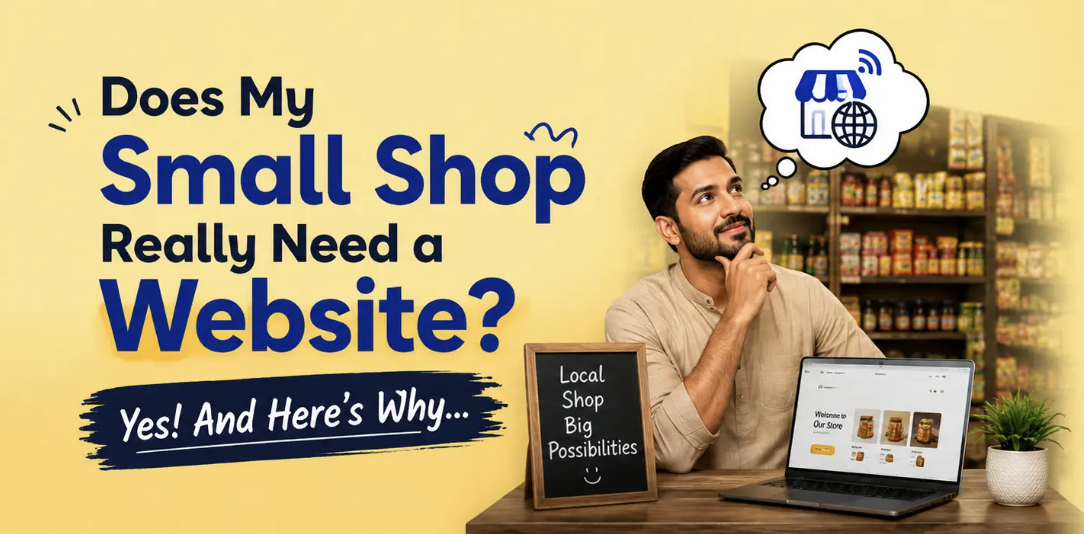
For many small businesses, WhatsApp has become one of the easiest ways to communicate with customers. Retailers share product photos, send price lists, answer enquiries, announce offers and receive orders through conversations. It is familiar, convenient and does not require a complicated setup.
But as a business grows, managing everything through individual chats can become challenging. Product details may get buried in conversations, customers may repeatedly ask for prices or availability, and tracking enquiries and orders can take up valuable time. A business that depends entirely on messaging also has limited space to present its complete catalogue and brand.
WhatsApp is a valuable digital channel, but it does not have to be the entire online business. A dedicated online store can provide the structure that growing businesses need.
1. Conversations Are Useful, but a Store Makes Product Discovery Easier
On WhatsApp, customers often discover products through messages, status updates, shared images or recommendations. This works well for personal communication, but customers may need to scroll through conversations or ask the seller for information about individual products.
WhatsApp can bring customers to the business; the website can give them a more complete place to explore what it offers.
2. A Dedicated Store Builds an Independent Brand Identity
A WhatsApp Business profile helps customers recognise and contact a seller. However, a website with the business's own domain name creates a separate digital destination that can reflect its identity.
This helps customers associate the shopping experience with the business itself, rather than depending only on a messaging profile or a social media page.
3. Managing Orders Becomes More Organised
When a business receives a small number of enquiries, managing orders through chats may be manageable. As enquiries increase, however, important details can get scattered across conversations.
A dedicated online store can bring product information and the ordering process together. Customers can select products and submit orders through a structured shopping experience, reducing the need to manually explain every detail.
Depending on the platform and its integrations, businesses can also connect payment and fulfilment services to simplify different stages of an order.
4. Your Business Can Reach Customers Beyond Existing Contacts
WhatsApp is particularly useful for communicating with people whose numbers a business already has. But relying only on existing contacts can limit how new customers discover the business.
A website gives retailers another destination to promote through search engines, social media, advertisements and other digital channels. It can also reach customers who have never interacted with the business.
A February 2026 McKinsey report on Indian e-commerce found that 53% of surveyed MSMEs preferred direct-to-consumer channels, such as websites and social commerce, over marketplaces and quick-commerce platforms. This reflects the growing interest in building direct relationships with customers.
5. The Best Approach Is to Use WhatsApp and Your Website Together
Businesses do not need to abandon WhatsApp when they create an online store. The two channels can serve different purposes.
Use WhatsApp for customer conversations, sharing updates, answering questions, and following up with buyers. The website can serve as the central product catalogue and shopping destination.
For example, a retailer can share a product link on WhatsApp instead of sending multiple photographs and manually explaining every detail. Customers can visit the store, explore available products and place an order through the website.
Platforms such as factori.com help retailers create their own online stores without requiring coding skills or a developer. Retailers can establish a store under their own domain, showcase products and focus on promotion, while the platform supports backend activities such as packing and shipping.
WhatsApp remains an important tool for small businesses, but a dedicated online store can provide the foundation for a more organised digital business. Using both together can help retailers communicate personally while giving customers a convenient place to shop.
References & Further Reading
-
McKinsey – The Great Unbundling of Indian E-commerce: MSMEs and the Direct-to-Consumer Revolution (February 2026): https://www.mckinsey.com/industries/logistics/our-insights/the-great-unbundling-of-indian-e-commerce-msmes-and-the-direct-to-consumer-revolution
-
Meta – AI Fuels India’s Omnichannel Shopping Surge: Meta & Retailers Association of India (February 2026): https://about.fb.com/news/2026/02/ai-fuels-indias-omnichannel-shopping-surge-meta-retailers-association-of-india/
-
India SME Forum – META Report Card 2025: https://indiasmeforum.org/digishaastra/assets/docs/Final-META-Report-Card-2025.pdf
-
factori.com – https://retailing.factori.com/